
Understanding THC Vapes in the UK
THC vapes have become a widely discussed topic in the UK as vaping technology, cannabis-based medicines and public awareness of cannabis continue to evolve. Search interest in terms such as THC vapes UK, cannabis cartridges, cannabis pens and medical cannabis vaping has also contributed to confusion about what products are legal, what products are medical, and what products may be prohibited.
One of the most important things to understand is that THC vaping is not the same as ordinary nicotine vaping. A conventional nicotine vape is generally designed to heat an e-liquid containing ingredients such as nicotine, propylene glycol, vegetable glycerine and flavourings. THC, by contrast, is the primary psychoactive constituent of cannabis and is subject to controlled-drug legislation in the UK.
There is also an important distinction between illicit recreational THC products and cannabis-based products for medicinal use (CBPMs). Certain cannabis-based medicines can legally be prescribed in the UK under specific circumstances, but this does not mean that ordinary THC vape cartridges sold through websites, social-media accounts or informal sellers are automatically legal.
This guide from VapeHavenUK.uk explains the subject in straightforward language, covering what THC is, how THC vapes differ from nicotine and CBD products, the UK’s legal framework, medical cannabis, potential health risks, product safety and frequently asked questions.
What Is THC?
THC stands for delta-9-tetrahydrocannabinol. It is one of the principal cannabinoids found naturally in cannabis.
Unlike CBD, THC is psychoactive. In other words, it can affect perception, mood, coordination, attention and other functions of the central nervous system. NHS England describes THC as the major psychoactive constituent of cannabis and the component associated with the intoxicating effects commonly described as a “high.”
Cannabis contains numerous chemical compounds called cannabinoids. THC and CBD are two of the best-known.
THC
THC can produce psychoactive effects and is controlled under UK drug legislation. Depending on the product, dose and individual, effects may include altered perception, relaxation, impaired coordination, changes in concentration and changes in time perception.
Some people can also experience unwanted effects such as anxiety, paranoia, dizziness, confusion or impaired judgement.
CBD
CBD, or cannabidiol, is another major cannabinoid. Unlike THC, CBD is not considered psychoactive in the same way and does not normally produce the characteristic intoxicating “high” associated with THC.
However, consumers should not assume that every product labelled “CBD” contains no THC. Product composition can vary, which is why accurate labelling and regulatory compliance are important.
The distinction between THC and CBD is particularly important when discussing UK cannabis law because the legal status of a product depends on its ingredients, formulation, intended use and applicable regulations.

What Are THC Vapes?
A THC vape is a vaping product designed to deliver cannabis-derived or cannabis-related compounds through an inhaled aerosol.
Depending on the product, a THC vape may consist of a battery-powered device and a cartridge, pod or other component containing a cannabis extract or formulation.
The basic principle resembles other vaping devices: a heating element warms a liquid or extract to create an aerosol that is inhaled. However, the presence of THC makes the legal and health considerations substantially different from those associated with ordinary nicotine vaping.
It is therefore inaccurate to assume that because a product looks like a conventional vape, it is regulated in exactly the same way.
A THC vape may be marketed using terms such as:
- THC vape
- cannabis vape
- THC cartridge
- cannabis cartridge
- THC pen
- cannabis pen
- cannabis oil vape
- THC disposable
These descriptions alone do not establish whether a product is legal, medically authorised or safe.
Consumers should also be cautious about online claims regarding potency, ingredients, effects or legality. A product can be advertised as “premium”, “lab-tested” or “UK legal” without those marketing statements necessarily proving its regulatory status.
Are THC Vapes Legal in the UK?
This is one of the most important questions surrounding THC vapes.
THC is a controlled substance in the UK, and ordinary recreational THC products should not be treated as legal consumer vaping products.
UK drug legislation controls cannabis and THC, although there are specific legal frameworks for certain cannabis-based medicines.
The major change to medical cannabis law occurred in 2018, when certain cannabis-based products for medicinal use were rescheduled, allowing appropriately qualified specialist doctors to prescribe them in specific circumstances.
However, this change did not legalise recreational cannabis or create a general retail market for THC vape cartridges.
This distinction is essential.
A person should not assume that a THC cartridge advertised online is legal simply because:
- it is sold in a vape-style device;
- the website describes it as “premium”;
- it is marketed as a wellness product;
- it claims to be imported legally;
- it contains cannabis-derived ingredients;
- another country permits recreational cannabis;
- the product is available through social media.
The legal position can depend on the exact formulation and circumstances. Anyone dealing with a product containing controlled cannabinoids should obtain current legal advice or consult official UK government guidance rather than relying on advertising claims.
Medical Cannabis and THC Vapes
Medical cannabis is an important exception that should be understood separately from recreational THC products.
In the UK, cannabis-based products for medicinal use can be prescribed under a controlled medical framework. NHS England explains that these products can be prescribed by doctors on the GMC Specialist Register when clinically appropriate.
Medical cannabis may be considered for certain patients when other treatment options have not been appropriate or effective.
NHS England identifies areas where licensed cannabis-based medicines have established clinical applications, including conditions involving multiple sclerosis-related spasticity, certain forms of severe treatment-resistant epilepsy and chemotherapy-related nausea and vomiting.
Importantly, many cannabis-based medicines are unlicensed products. This means that their prescribing requires appropriate clinical judgement and specialist oversight.
Medical cannabis should therefore be viewed as a prescription medicine, not as an ordinary recreational vape product.
If a patient has been prescribed a cannabis-based medicine, they should follow the instructions provided by their specialist clinician and pharmacy.
They should also avoid substituting an unregulated THC cartridge for a prescribed medicine simply because the products appear similar.
THC Vapes vs Nicotine Vapes
THC vapes and nicotine vapes may look similar, but their contents, purposes and legal frameworks are very different.
Nicotine vapes
Nicotine vaping products are primarily used by adult smokers as an alternative source of nicotine. NHS guidance explains that e-cigarettes heat e-liquid to produce an aerosol rather than burning tobacco.
UK nicotine vaping products are subject to specific safety and regulatory requirements.
THC vapes
THC vapes contain or are intended to deliver THC, which has psychoactive properties and is subject to controlled-drug legislation.
Consequently, the regulatory status of THC products cannot simply be inferred from the rules applying to ordinary nicotine e-cigarettes.
This distinction is especially important for consumers searching online for “THC vape UK” because a product that looks identical to a nicotine vape can have a completely different legal status.
THC Vapes vs CBD Vapes
Another common source of confusion is the difference between THC and CBD vaping products.
CBD products are generally associated with non-intoxicating cannabinoid products, whereas THC is psychoactive.
However, consumers should not rely solely on the product’s front label.
A responsible approach is to examine:
- the complete ingredient information;
- the manufacturer’s identity;
- the product’s intended purpose;
- applicable UK regulations;
- laboratory documentation where relevant;
- whether the product is actually authorised for its claimed use.
NHS England notes that pure CBD is not a controlled drug for the purposes of the Misuse of Drugs Act, but cannabis-based products containing controlled cannabinoids can fall under different rules.
Therefore, “CBD vape” and “THC vape” should never be treated as interchangeable terms.
Potential Health Effects of THC
The health effects of THC can vary considerably between individuals.
Some people may experience relaxation or changes in mood, while others can experience unpleasant psychological or physical effects.
Potential short-term effects may include:
- altered perception;
- impaired attention;
- slower reaction time;
- reduced coordination;
- dizziness;
- anxiety;
- confusion;
- paranoia;
- changes in heart rate;
- impaired judgement.
The amount of THC, individual tolerance, other substances being used and a person’s physical and mental health can all influence the experience.
There are also concerns surrounding frequent or high exposure to THC. NHS England highlights concerns about the potential effects of chronic high exposure to THC on brain development, brain structure and mental health, particularly in relation to developing brains.
This is one reason young people should not use THC products recreationally.
Why THC Vaping Can Present Additional Risks
Vaping avoids the combustion process associated with smoking, but that does not automatically make every vaping product safe.
The risks associated with a THC vape can involve both the substance being delivered and the hardware used to deliver it.
Unregulated products can create additional uncertainty because consumers may not know exactly what is inside the cartridge.
Potential concerns include:
Unknown ingredients
Illicit or poorly labelled products may contain substances that are not clearly identified.
Inaccurate potency
The stated THC concentration may not accurately represent the contents of an unregulated product.
Contamination
Poor manufacturing processes can introduce contaminants or unwanted substances.
Hardware problems
Faulty batteries, damaged cartridges and inappropriate charging equipment can create fire or injury risks.
Drug interactions
THC can interact with other medicines or substances. Anyone receiving medical treatment should discuss cannabis-based medicines with an appropriate healthcare professional.
For these reasons, consumers should not assume that a product is safe merely because it is packaged as a vape.
THC Vapes and Driving in the UK
Driving after consuming THC is a serious safety issue.
THC can affect concentration, coordination, perception and reaction time. These effects can make driving dangerous.
UK drug-driving laws also make this an important legal issue. A person should never drive when impaired by cannabis or another drug.
Even when someone believes they “feel normal”, impairment may still affect driving ability.
The safest approach is simple: do not drive after consuming THC or while affected by a cannabis-based medicine unless you have received appropriate medical and legal guidance about your treatment and driving responsibilities.
People using prescribed cannabis medicines should discuss driving with their specialist or pharmacist and check current UK requirements.
Can THC Vapes Be Used for Medical Purposes?
Some cannabis-based medicines can be administered through inhalation or vaporisation, depending on the specific medicine and prescription.
However, this does not mean that every THC vape is a medical product.
There is a significant difference between:
A prescribed cannabis-based medicine
and
an unregulated THC vape marketed online.
A prescribed medicine has a defined clinical context and is supplied through regulated medical channels.
A recreational THC cartridge may have uncertain ingredients, uncertain potency and no comparable clinical oversight.
Patients should therefore never replace a prescribed medicine with an unregulated cannabis vape without consulting their healthcare professional.
How to Recognise Potentially Unreliable THC Vape Claims
Consumers researching THC products online may encounter many claims that sound reassuring but provide little meaningful evidence.
Be cautious when websites or sellers claim that a product is:
- “100% legal” without explaining the legal basis;
- “UK approved” without identifying the regulator or authorisation;
- “medical grade” without appropriate medical documentation;
- “completely safe”;
- “risk free”;
- “undetectable”;
- “guaranteed pure”;
- “strongest THC available”.
Marketing language is not a substitute for regulatory evidence.
The same principle applies to laboratory claims. A reference to “lab tested” is not necessarily sufficient. Consumers should consider who conducted the testing, what was tested, whether the report corresponds to the specific product and whether the laboratory documentation is credible.
What Should Consumers Know About THC Vape Hardware?
Although THC itself receives most of the attention, hardware safety is also important.
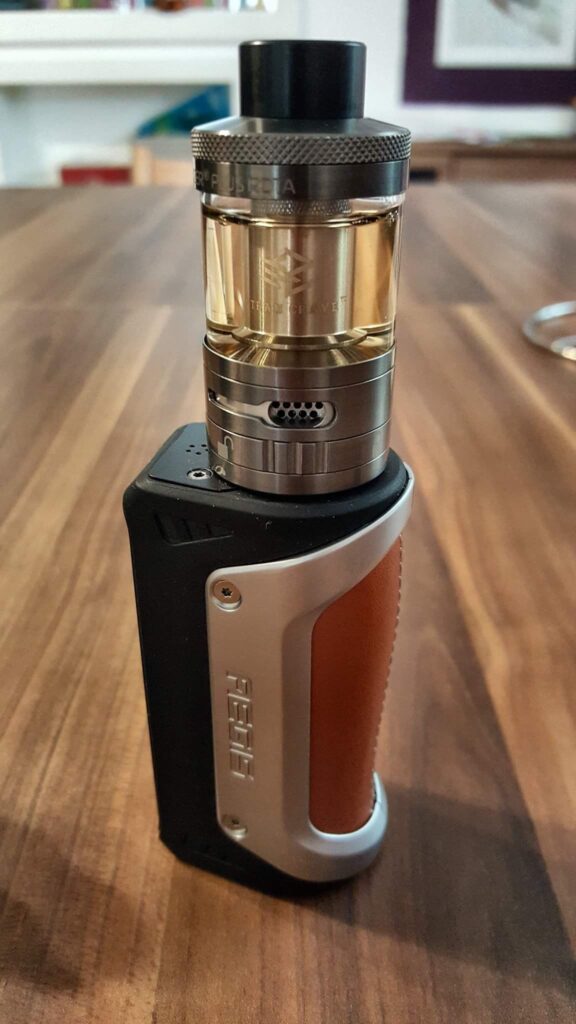
Vaping devices typically contain a battery, heating element and control components. Depending on the design, they may also contain a cartridge or reservoir.
Electrical safety principles remain important.
For example, users should not use visibly damaged rechargeable devices or batteries. NHS guidance for vaping also recommends using the correct charger and not leaving rechargeable devices charging unattended or overnight.
For prescribed cannabis medicines, patients should follow the instructions supplied with the specific medical device or formulation rather than adapting unrelated vaping hardware.
Why Age and Youth Exposure Matter
THC products are particularly concerning when used by children and teenagers.
The brain continues developing during adolescence and early adulthood. NHS England specifically highlights concerns about THC exposure and developing brains.
Young people may also be more vulnerable to misleading marketing, peer pressure and products designed with attractive flavours or packaging.
Educational information should therefore emphasise that vaping is not something children should experiment with.
This is especially important because THC products can combine the risks of cannabis exposure with the additional uncertainties associated with vaping hardware and unregulated formulations.
Parents, educators and young adults should be encouraged to obtain information from reputable health and government sources rather than social-media advertisements or anonymous sellers.
THC Vapes and Addiction
THC does not affect everyone in the same way, but repeated cannabis use can become problematic for some people.
Signs that cannabis use may be becoming difficult to control can include:
- repeatedly using more than intended;
- difficulty cutting down;
- prioritising cannabis over responsibilities;
- continuing to use despite negative consequences;
- spending substantial time obtaining or using cannabis;
- experiencing strong cravings;
- struggling to stop.
People who are concerned about their cannabis use should speak with a healthcare professional or appropriate drug-support service.
Seeking help should not be viewed as a failure. Substance-use problems are health issues that can be addressed with appropriate support.
Why Product Labels and Online Reviews Are Not Enough
Online reviews can help consumers understand general experiences with a product, but reviews should not be treated as proof of safety or legality.
A five-star review cannot establish:
- that the product is legally authorised;
- that the THC concentration is accurate;
- that the product is free from contaminants;
- that it is suitable for a particular medical condition;
- that it is safe for another individual.
Similarly, photographs of packaging do not establish authenticity.
This is why responsible cannabis education should focus on evidence, legislation, clinical guidance and product regulation rather than promotional claims.
What About THC Vape Products Advertised as “Legal”?
The phrase “legal THC vape” should be treated carefully.
Some products may use the term “THC” in marketing even when their actual cannabinoid composition is different. Others may rely on complicated claims about trace cannabinoids, hemp-derived ingredients or international regulations.
UK law can be complex, and the legal position depends on the exact substance and formulation.
Consumers should therefore avoid assuming that a product is legal simply because a seller describes it as legal.
For current legal questions, consult official UK government information or a qualified legal professional.
The same caution applies to products advertised as legal because they are manufactured or sold legally in another country. Foreign legality does not automatically make a product legal to possess, import or supply in the UK.
The Future of Cannabis and Vaping in the UK
The UK’s approach to cannabis continues to attract medical, scientific and political discussion.
Medical cannabis has already become a recognised area of clinical practice under a controlled regulatory framework. At the same time, researchers continue to investigate the potential benefits and risks of cannabinoids.
As research develops, consumers may encounter new products and new claims.
This makes reliable education increasingly important.
For VapeHavenUK.uk, the goal should be to help readers distinguish between:
regulated vaping products, medical cannabis, CBD products and illicit THC products.
These categories should not be treated as interchangeable.
Frequently Asked Questions About THC Vapes in the UK
Are THC vapes legal in the UK?
Recreational THC products are not generally legal consumer vape products in the UK. THC is controlled, while certain cannabis-based medicines can legally be prescribed under specific medical circumstances.
Can you get medical THC in the UK?
Yes. Certain cannabis-based products for medicinal use can be prescribed under the UK medical framework when clinically appropriate. NHS England states that prescribing is subject to specialist requirements.
Is THC the same as CBD?
No. THC is psychoactive, while CBD is not considered psychoactive in the same way. Their legal and regulatory treatment can also differ.
Are THC vapes safer than smoking cannabis?
It is not appropriate to assume that an illicit THC vape is safe simply because it does not involve combustion. Product contamination, unknown ingredients, potency and hardware can all create risks.
Can THC affect driving?
Yes. THC can impair attention, coordination, reaction time and judgement. Driving after consuming THC can therefore create serious safety and legal risks.
Can teenagers use THC vapes?
THC products should not be treated as suitable products for young people. There are particular concerns regarding cannabis exposure and the developing brain.
Is every CBD vape legal?
Not necessarily. CBD products have their own regulatory requirements, and consumers should check the exact ingredients, intended use and applicable UK rules rather than assuming legality from the word “CBD” alone.
Can a THC vape be bought from an ordinary vape shop?
The fact that a product is displayed or advertised as a vape does not establish that it is lawful. THC remains subject to controlled-drug legislation.
Make Informed Decisions About THC Vapes
THC vapes occupy a complicated space at the intersection of cannabis, vaping, medicine, consumer products and UK drug law.
The most important lesson is that a THC vape should not be treated like an ordinary nicotine vape.
THC is psychoactive and controlled under UK law, while certain cannabis-based medicines can be prescribed through regulated medical channels.
Consumers should be particularly cautious about products marketed online as “legal THC vapes”, “medical THC vapes” or “UK-approved cannabis vapes” when no credible regulatory or medical evidence is provided.
Understanding the difference between THC, CBD, nicotine and prescribed cannabis medicines can help people make better-informed decisions.
For readers of VapeHavenUK.uk, responsible vaping education should always prioritise accurate information, current UK regulations, product safety and health awareness over unverified marketing claims.